
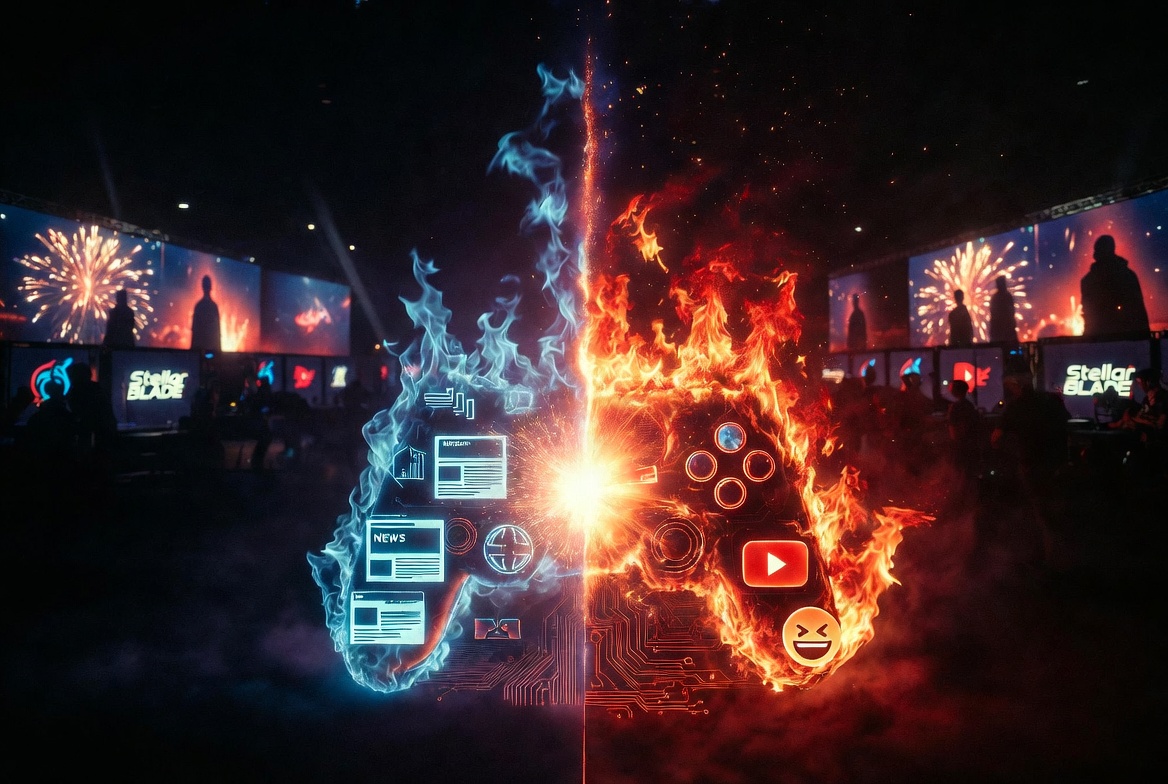
This story really began with a simple question I had about why there are so many gaming showcases every summer. For the record, I never thought there was anything sinister going on. I just wanted to understand what drives this big wave of announcements and trailers during that time. As I started digging, I found myself looking into marketing schedules and industry reports, trying to piece together the reasoning behind it all.
While I was looking into all of this, I stumbled across a video by Smash JT reacting to the reveal of Stellar Blade: Blood Rain. He mentioned that some people in what he called the ‘modern audience’ were already having strong reactions to the new main character. The thumbnail and title were obviously designed to grab attention, but I decided to watch it anyway.
That video made me stop and think about something else entirely. What is it that actually draws people to creators like Smash JT, RGT 85, Dreamcast Guy, TheQuartering, and all the others who seem to have such a big presence in gaming media these days?
I ended up spending a few days watching their videos, reading through criticisms, and comparing everything to what I saw on more traditional gaming sites. What started as a side project for me, just out of curiosity as a journalism student, slowly turned into something bigger—a look at just how fractured the media landscape has become.
Taking a Step Back: Rage-Bait Creators vs. Traditional Outlets
Traditional gaming journalism has lost much of its trust and resources. In 2025, full-time games journalists said the field felt unstable, with many layoffs, site closures, and a move toward freelance and guide-based work. A 2024 survey found that 56%of game journalists felt pessimistic about the future, blaming money problems, SEO demands, and the impact of AI. Even surviving full-time journalists described the situation as “There Are So Few Of Us Left.”
Into that gap came a new kind of coverage. It was YouTube creators focusing on news commentary, drama, and controversy. Their style is all about energy and putting a spotlight on negative stories, something that traditional journalism often can’t keep up with. I think this shift is a big reason why the media landscape feels so divided right now.
Here’s some data showing how successful this model has become:
- Channels like RGT 85 have pulled in hundreds of thousands of subscribers and get huge view counts. By posting regular reaction videos to industry news, they’ve managed to turn this approach into a steady monthly income.
- Other mid-sized creators have grown their channels by being quick to react to news and by sharing their own takes. They seem to build trust with viewers at a time when trust in traditional media keeps dropping, hitting a new U.S. low of 28% in 2025.
This trend fits perfectly with how YouTube works, since the platform rewards creators who post often, stir up controversy, and keep people watching. Traditional written reporting just doesn’t do these things as well.
Examining Accountability: Both Sides
Supporters say these creators provide accountability journalism by highlighting issues that traditional outlets might miss. For example, they cover charity scandals, review embargoes, crunch culture, DEI efforts, or broken promises from developers. Sometimes, early tips from anonymous sources are picked up by bigger outlets, filling a gap as traditional journalism declines.
There are some real strengths to this approach. Sometimes, these creators can spot actual problems faster than traditional sites that rely on industry access. With trust in the media at record lows, these voices end up validating many gamers’ frustrations about bias or close relationships with publishers.
But there are problems too. A lot of this content is just collecting, reacting to, and sharing opinions instead of doing any real investigative work. Relying on unverified anonymous tips, sometimes even from trolls, shows a lack of fact-checking. Posting video after video on the same story and rarely making corrections puts clicks ahead of depth, which doesn’t really meet the professional standards that call for accuracy, verification, independence, and minimizing harm.
Actual accountability journalism is pretty rare among these creators. Most of what they do is just sensational skepticism, not real investigative reporting. That’s a key difference. Reaction-based content can sometimes reveal problems, but it often weakens trust and depth because it doesn’t adhere to strict standards.
I don’t think these creators are always trying to do harm. They tap into real frustration in a world where people don’t trust the media much, and they give a voice to concerns that traditional outlets might miss. Still, their style can blur the line between commentary and journalism, shaping what the community expects and how the industry is perceived.
My original question about summer showcases faded into the background as I realized something bigger was going on. In today’s divided gaming media, strong journalism can’t be replaced by either flawed old-school reporting or crowd-driven skepticism alone. If we want the community to be well-served, we have to look at the media honestly and keep demanding real standards.